Monk Fruit Extract
Monk Fruit Extract
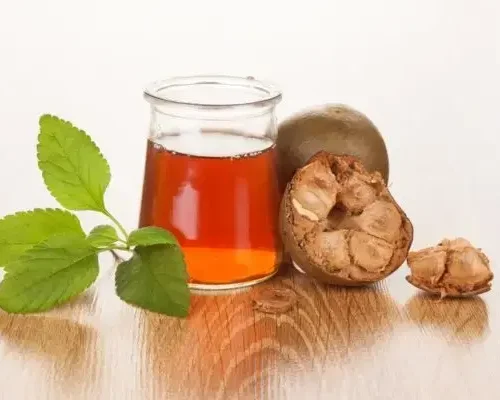
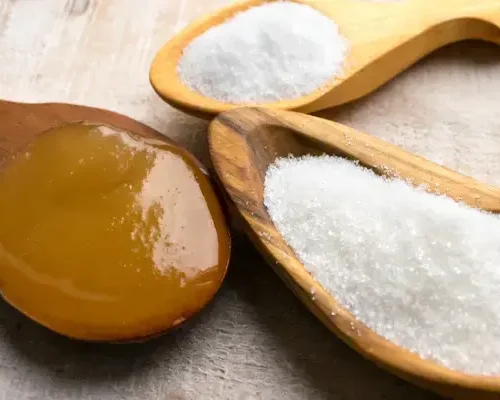
Monk fruit extract is derived from the fruit of monk fruit, a plant native to southern China. Monk fruit extract is widely used in foods, beverages, and dietary supplements as a healthier alternative to sugar and artificial sweeteners.Please make sure to contact us at info@wingengroup.com if you have demand of this product, we will feedback back to you within 12 hours.

Main Assay:Monk Fruit Extract
CAS No.:84929-06-2
MOQ:20kgs/drums
Quality Control
All goods we carry are manufactured with the best quality,leading the quality of life and fashion trends.









Monk Fruit Extract
Monk fruit extract is derived from the fruit of monk fruit, a plant native to southern China. Monk fruit extract is widely used in foods, beverages, and dietary supplements as a healthier alternative to sugar and artificial sweeteners.Please make sure to contact us at info@wingengroup.com if you have demand of this product, we will feedback back to you within 12 hours.
Main Assay:
CAS No.:
MOQ:
Monk Fruit Extract
84929-06-2
20kgs/drums
Quality Control
All goods we carry are manufactured with the best quality,leading the quality of life and fashion trends.






Description
Monk fruit extract is a natural sweetener derived from monk fruit (Siraitia grosvenorii), a plant native to southern China. The extract is made by processing the fruit to extract its sweetness, which is attributed to compounds called mogrosides. These mogrosides are the source of monk fruit’s intense sweetness, making monk fruit extract a popular alternative to sugar and artificial sweeteners.
Key Characteristics
Natural Sweetener: Monk Fruit Extract is a completely natural sweetener, unlike many artificial sweeteners, which appeals to health-conscious consumers.
Zero Calories: One of the major attractions of Monk Fruit Extract is that it contains virtually no calories, making it ideal for people on low-calorie or low-carb diets.
Blood Sugar-Friendly: It does not affect blood glucose levels, which makes it suitable for individuals with diabetes or those following low-glycemic diets.
Antioxidant Properties: The mogrosides in Monk Fruit Extract have antioxidant effects, which can help protect the body from oxidative stress and inflammation.
Monk fruit extract is widely used in foods, beverages and dietary supplements as a healthier alternative to sugar and artificial sweeteners because of its high content of mogrosides, which are the source of its intense sweetness.
How Monk Fruit Extract is Made?
Monk Fruit Extract is made through a multi-step process:
Harvesting: Monk fruit, also known as luo han guo, is harvested from vines native to Southern China.
Extraction: The fruit is then processed to extract the sweet compounds. The mogrosides are separated using water or alcohol-based extraction methods.
Purification: After extraction, the mogrosides are purified and concentrated into a form suitable for food and beverage applications—either in liquid, powder, or granulated form.
Types of Monk Fruit Extract
Monk Fruit Extract is mainly classified according to the form of the extract, concentration, content of active ingredients and ratio with other ingredients. The following are some common monk fruit extracts classified by extract form.
1. Monk Fruit Concentrate
Monk Fruit Concentrate is a concentrated liquid extracted from monk fruit, usually containing high concentrations of mogrosides (the main sweet ingredient) in high concentrations. It may be a pure form of monk fruit extract, or it may contain some water or other natural ingredients.
Appearance:
Monk Fruit Concentrate usually appears as a thick liquid, which may be light amber or transparent liquid.
Uses:
It is mainly used in products such as beverages, desserts, and health supplements to provide a strong sweet taste. Due to its high concentration, it usually needs to be diluted or mixed with other ingredients.
Sweetness:
It is very sweet, usually more than 100 times the sweetness of sucrose, suitable for small amounts.
2. Monk Fruit Powder
Monk Fruit Powder is mainly a powder made by concentrating, drying and crushing monk fruit extract. It may be pure monk fruit extract or may contain a small amount of other natural ingredients, but generally contains no or very little other sweeteners.
Appearance:
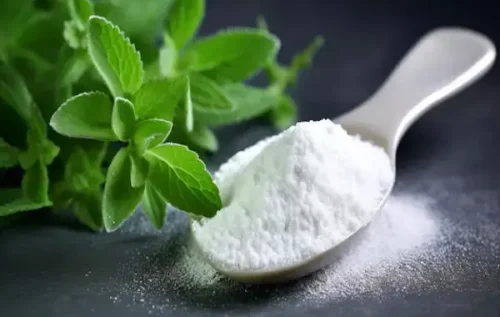
Monk Fruit Powder usually appears as a fine white or off-white powder, similar to ordinary powdered sugar or crystalline powder.
Uses:
It is used for products that require high sweetness, such as beverages, baked goods, candies, etc., and is usually used for sugar control or sweetness adjustment in health foods. It is also suitable for some health supplements and natural sweetener products.
Sweetness:
The sweetness is very high, usually more than 100 times the sweetness of sucrose, so a very small amount is usually required to achieve the required sweetness.
3. Monk Fruit Sweetener
Monk Fruit Sweetener is usually a mixture of monk fruit extract (mogrosides) and other natural sweeteners (such as erythritol, stevia, etc.). The purpose is to adjust the sweetness, reduce the extremely high sweetness of monk fruit extract, and improve the taste and structure.
Appearance:
Monk Fruit Sweetener usually appears as granules or powders, and may be white or transparent granules, similar to granular sweeteners such as regular sugar and erythritol. Its particle size and texture are usually similar to sugar and easy to dissolve.
Uses:
Widely used in food and beverages, especially low-sugar or sugar-free products. Suitable for baking, beverages, candies, desserts, etc., as a substitute for sucrose, providing sweetness and reducing calories.
Sweetness:
The sweetness is usually close to sucrose (about 100% sweetness), but with almost no calories. Because it may contain other sweeteners, its sweetness is lower than that of pure monk fruit extract.
Benefits and Applications of Monk Fruit Extract
Benefits of Monk Fruit Extract
Weight Management: With no calories or carbohydrates, Monk Fruit Extract is commonly used in weight loss products as a calorie-free sugar substitute.
Diabetes Management: Monk Fruit Extract is safe for people with diabetes as it doesn’t impact blood sugar levels, unlike regular sugar.
No Aftertaste: Unlike stevia and some other natural sweeteners, Monk Fruit Extract does not have a bitter aftertaste, which makes it more palatable in various foods and beverages.
Antioxidant Effects: The mogrosides in monk fruit are thought to have antioxidant properties, which may help protect cells from damage caused by free radicals.
Applications of Monk Fruit Extract
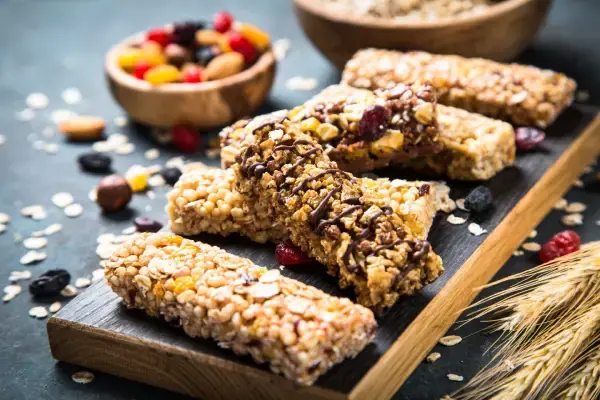
Food Industry: Used in low-sugar beverages (soda, tea, flavored waters), snacks, baked goods, and dairy products like yogurt and ice cream.
Dietary Supplements: Incorporated into protein powders, meal replacement shakes, and health supplements as a sweetener without the added calories.
Sugar-Free Products: Commonly found in sugar-free or reduced-sugar versions of chocolates, candies, and gum.
Health Drinks and Teas: Used in functional beverages, herbal teas, and wellness drinks for its sweetness and health benefits.
Specification
| Analysis Item | Specification | Result | Test Method |
|---|---|---|---|
| Active Ingredients | |||
| Assay | Mogroside V 48.0%-52.0% | 50.15% | HPLC |
| Physical Control | |||
| Appearance | Fine light yellow to off-white powder | Conforms | Visual |
| Odor | Characteristic | Conforms | Sensory |
| Taste | Sweet | Conforms | Sensory |
| Sieve Analysis | NLT 95% pass 80 mesh | Conforms | CP2020 |
| Moisture Content | NMT 5.0% | 2.65% | GB5009.3-2016 |
| Ash | NMT 2.0% | 0.02% | GB5009.4-2016 |
| Solvent Residue | |||
| Ethanol | NMT 5000ppm | <50ppm | GC |
| Methanol | NMT 200ppm | <50ppm | GC |
| Chemical Control | |||
| Arsenic (As) | NMT 0.5ppm | <0.1ppm | GB5009.11-2024 |
| Cadmium(Cd) | NMT 0.5ppm | <0.01ppm | GB5009.15-2023 |
| Lead (Pb) | NMT 1ppm | <0.1ppm | GB5009.12-2023 |
| Mercury(Hg) | NMT 0.1ppm | <0.01ppm | GB5009.17-2021 |
| Heavy Metals | NMT 10ppm | <10ppm | GB5009.74-2014 |
| Pesticides Residues | Conform to GB2763&USP36 | Conforms | GC-MSMS/LC-MSMS |
| Microbiological Control | |||
| Total Plate Count | NMT 1000CFU/g | 10CFU/g | GB4789.2-2022 |
| Yeast & Mold | NMT 100CFU/g | <10CFU/g | GB4789.15-2016 |
| Coliforms | NMT 30MPN/100g | <30MPN/100g | GB4789.3-2016 |
| E.Coli | Negative/g | Conforms | GB4789.38-2012 |
| Salmonella | Negative/25g | Conforms | GB4789.4-2024 |
| S. aureus | Negative/25g | Conforms | GB4789.10-2016 |
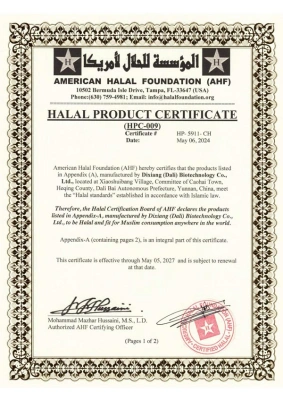
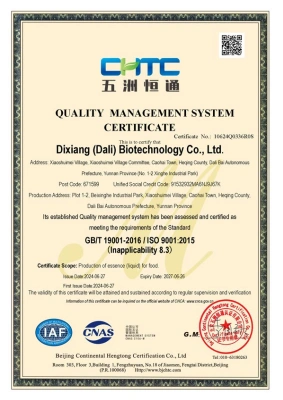
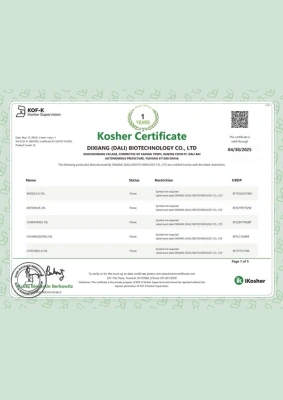
Certification
FAQs
Why Choose Monk Fruit Extract?
Natural and Clean Label: As a natural product, it fits well with the clean label trend in the food and beverage industry, where consumers are looking for fewer artificial ingredients.
Safe for Diabetics: Unlike sugar, Monk Fruit Extract has no glycemic impact, making it a safe alternative for individuals with diabetes or insulin resistance.
Sustainable: It is sourced from a fruit that is native to Asia, and as the demand for low-calorie sweeteners grows, Monk Fruit Extract remains an eco-friendly option compared to some synthetic alternatives.
Related Products
Contact Us
info@wingengroup.com
+86-21-39652034
+86-17717633275
Address
Room 207, Building 3, No. 2216 Jingao Road, Pudong New Area, Shanghai, China

Description
Monk fruit extract is a natural sweetener derived from monk fruit (Siraitia grosvenorii), a plant native to southern China. The extract is made by processing the fruit to extract its sweetness, which is attributed to compounds called mogrosides. These mogrosides are the source of monk fruit’s intense sweetness, making monk fruit extract a popular alternative to sugar and artificial sweeteners.
Key Characteristics
Natural Sweetener: Monk Fruit Extract is a completely natural sweetener, unlike many artificial sweeteners, which appeals to health-conscious consumers.
Zero Calories: One of the major attractions of Monk Fruit Extract is that it contains virtually no calories, making it ideal for people on low-calorie or low-carb diets.
Blood Sugar-Friendly: It does not affect blood glucose levels, which makes it suitable for individuals with diabetes or those following low-glycemic diets.
Antioxidant Properties: The mogrosides in Monk Fruit Extract have antioxidant effects, which can help protect the body from oxidative stress and inflammation.
Monk fruit extract is widely used in foods, beverages and dietary supplements as a healthier alternative to sugar and artificial sweeteners because of its high content of mogrosides, which are the source of its intense sweetness.

How Monk Fruit Extract is Made?
Monk Fruit Extract is made through a multi-step process:
Harvesting: Monk fruit, also known as luo han guo, is harvested from vines native to Southern China.
Extraction: The fruit is then processed to extract the sweet compounds. The mogrosides are separated using water or alcohol-based extraction methods.
Purification: After extraction, the mogrosides are purified and concentrated into a form suitable for food and beverage applications—either in liquid, powder, or granulated form.
Types of Monk Fruit Extract
Monk Fruit Extract is mainly classified according to the form of the extract, concentration, content of active ingredients and ratio with other ingredients. The following are some common monk fruit extracts classified by extract form.
1. Monk Fruit Concentrate
Monk Fruit Concentrate is a concentrated liquid extracted from monk fruit, usually containing high concentrations of mogrosides (the main sweet ingredient) in high concentrations. It may be a pure form of monk fruit extract, or it may contain some water or other natural ingredients.
Appearance:
Monk Fruit Concentrate usually appears as a thick liquid, which may be light amber or transparent liquid.
Uses:
It is mainly used in products such as beverages, desserts, and health supplements to provide a strong sweet taste. Due to its high concentration, it usually needs to be diluted or mixed with other ingredients.
Sweetness:
It is very sweet, usually more than 100 times the sweetness of sucrose, suitable for small amounts.

2. Monk Fruit Powder
Monk Fruit Powder is mainly a powder made by concentrating, drying and crushing monk fruit extract. It may be pure monk fruit extract or may contain a small amount of other natural ingredients, but generally contains no or very little other sweeteners.
Appearance:
Monk Fruit Powder usually appears as a fine white or off-white powder, similar to ordinary powdered sugar or crystalline powder.
Uses:
It is used for products that require high sweetness, such as beverages, baked goods, candies, etc., and is usually used for sugar control or sweetness adjustment in health foods. It is also suitable for some health supplements and natural sweetener products.
Sweetness:
The sweetness is very high, usually more than 100 times the sweetness of sucrose, so a very small amount is usually required to achieve the required sweetness.
3. Monk Fruit Sweetener
Monk Fruit Sweetener is usually a mixture of monk fruit extract (mogrosides) and other natural sweeteners (such as erythritol, stevia, etc.). The purpose is to adjust the sweetness, reduce the extremely high sweetness of monk fruit extract, and improve the taste and structure.
Appearance:
Monk Fruit Sweetener usually appears as granules or powders, and may be white or transparent granules, similar to granular sweeteners such as regular sugar and erythritol. Its particle size and texture are usually similar to sugar and easy to dissolve.
Uses:
Widely used in food and beverages, especially low-sugar or sugar-free products. Suitable for baking, beverages, candies, desserts, etc., as a substitute for sucrose, providing sweetness and reducing calories.
Sweetness:
The sweetness is usually close to sucrose (about 100% sweetness), but with almost no calories. Because it may contain other sweeteners, its sweetness is lower than that of pure monk fruit extract.


Benefits and Applications of Monk Fruit Extract
Benefits of Monk Fruit Extract
Weight Management: With no calories or carbohydrates, Monk Fruit Extract is commonly used in weight loss products as a calorie-free sugar substitute.
Diabetes Management: Monk Fruit Extract is safe for people with diabetes as it doesn’t impact blood sugar levels, unlike regular sugar.
No Aftertaste: Unlike stevia and some other natural sweeteners, Monk Fruit Extract does not have a bitter aftertaste, which makes it more palatable in various foods and beverages.
Antioxidant Effects: The mogrosides in monk fruit are thought to have antioxidant properties, which may help protect cells from damage caused by free radicals.
Applications of Monk Fruit Extract
Food Industry: Used in low-sugar beverages (soda, tea, flavored waters), snacks, baked goods, and dairy products like yogurt and ice cream.
Dietary Supplements: Incorporated into protein powders, meal replacement shakes, and health supplements as a sweetener without the added calories.
Sugar-Free Products: Commonly found in sugar-free or reduced-sugar versions of chocolates, candies, and gum.
Health Drinks and Teas: Used in functional beverages, herbal teas, and wellness drinks for its sweetness and health benefits.
Specification
| Analysis Item | Specification | Result | Test Method |
|---|---|---|---|
| Active Ingredients | |||
| Assay | Mogroside V 48.0%-52.0% | 50.15% | HPLC |
| Physical Control | |||
| Appearance | Fine light yellow to off-white powder | Conforms | Visual |
| Odor | Characteristic | Conforms | Sensory |
| Taste | Sweet | Conforms | Sensory |
| Sieve Analysis | NLT 95% pass 80 mesh | Conforms | CP2020 |
| Moisture Content | NMT 5.0% | 2.65% | GB5009.3-2016 |
| Ash | NMT 2.0% | 0.02% | GB5009.4-2016 |
| Solvent Residue | |||
| Ethanol | NMT 5000ppm | <50ppm | GC |
| Methanol | NMT 200ppm | <50ppm | GC |
| Chemical Control | |||
| Arsenic (As) | NMT 0.5ppm | <0.1ppm | GB5009.11-2024 |
| Cadmium(Cd) | NMT 0.5ppm | <0.01ppm | GB5009.15-2023 |
| Lead (Pb) | NMT 1ppm | <0.1ppm | GB5009.12-2023 |
| Mercury(Hg) | NMT 0.1ppm | <0.01ppm | GB5009.17-2021 |
| Heavy Metals | NMT 10ppm | <10ppm | GB5009.74-2014 |
| Pesticides Residues | Conform to GB2763&USP36 | Conforms | GC-MSMS/LC-MSMS |
| Microbiological Control | |||
| Total Plate Count | NMT 1000CFU/g | 10CFU/g | GB4789.2-2022 |
| Yeast & Mold | NMT 100CFU/g | <10CFU/g | GB4789.15-2016 |
| Coliforms | NMT 30MPN/100g | <30MPN/100g | GB4789.3-2016 |
| E.Coli | Negative/g | Conforms | GB4789.38-2012 |
| Salmonella | Negative/25g | Conforms | GB4789.4-2024 |
| S. aureus | Negative/25g | Conforms | GB4789.10-2016 |
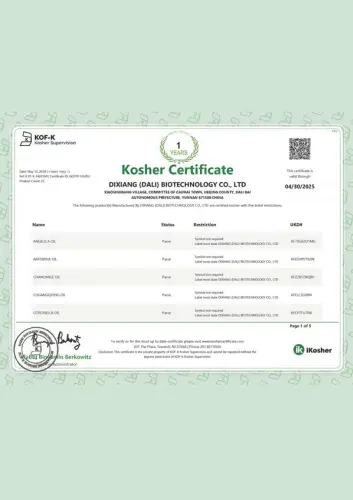
Certification


FAQs
Why Choose Monk Fruit Extract?
Natural and Clean Label: As a natural product, it fits well with the clean label trend in the food and beverage industry, where consumers are looking for fewer artificial ingredients.
Safe for Diabetics: Unlike sugar, Monk Fruit Extract has no glycemic impact, making it a safe alternative for individuals with diabetes or insulin resistance.
Sustainable: It is sourced from a fruit that is native to Asia, and as the demand for low-calorie sweeteners grows, Monk Fruit Extract remains an eco-friendly option compared to some synthetic alternatives.