

Citronella Oil is a plant essential oil extracted from the citronella plant, and the most mainstream extraction method is steam distillation. This extraction process is currently the most widely used, economical, and suitable for industrial production.
Steps of Steam Distillation
1. Selecting Materials
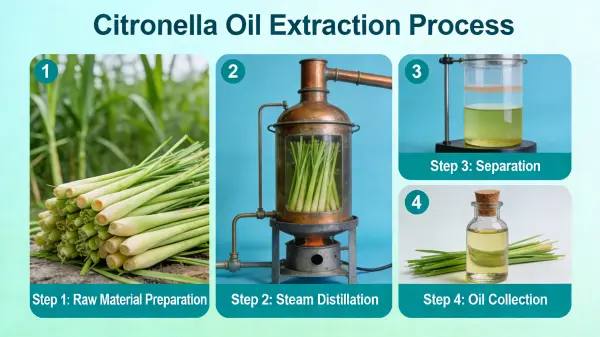
Select fresh and dry citronella grass (leaves and stems), wash them, and cut them into 2-5 cm lengths. You can also increase the surface area by crushing to ensure full utilization of the raw materials.
2. Placing Materials
Place the processed citronella grass raw materials in a distillation tank with multiple layers, spreading them out to ensure that steam can fully contact all the citronella grass.
3. Adding Water and Heating
Pour an adequate amount of deionized water into the bottom of the distillation tank, about 45 times the weight of the raw materials, and then add 9% concentration of NaCl. Then heat it to generate steam.
4. Distillation Process
Through distillation, the steam carries the unique essential oil components of the citronella grass into the condenser tube. Subsequently, the high-temperature liquid cools in the condenser and gradually forms a milky white liquid.
5. Oil-Water Separation
The liquid in the condenser is separated into oil and water through instruments such as a separatory funnel. The citronella crude extract with a density less than water will float on the water surface and can be collected later.
6. Secondary Distillation
To ensure the concentration of the extract meets the standard, a secondary distillation operation is usually required. Distill under vacuum to purify, and avoid high temperatures that may damage the active components in the extract.
7. Drying and Storage
The citronella essential oil after secondary distillation may contain trace amounts of water. Add a desiccant, anhydrous sodium sulfate, to absorb the water. After standing for a few hours, filter out the water.
Subsequently, the extracted essential oil needs to be sealed and stored in a refrigerator, and avoid direct sunlight. During storage, prevent oxidation and deterioration of the essential oil.

Extraction Precautions
1. The variety of lemongrass and its growing environment can affect the yield of essential oil. It is best to harvest the raw materials on a sunny day.
2. The raw materials should be kept from being completely dry, otherwise it will cause the loss of essential oil through evaporation.
3. The sealing performance of the extraction equipment directly affects the recovery efficiency of essential oil. The better the sealing of the equipment, the more essential oil can be recovered.
4. The oil yield of lemongrass is approximately 0.5% – 1.5%. From 100 kilograms of fresh lemongrass, 0.5 to 1.5 kilograms of essential oil can be extracted.
Other extraction methods
Apart from the most commonly used steam distillation method, citronella essential oil can also be extracted through solvent extraction and supercritical CO₂ extraction. The former can retain the aroma molecules to the greatest extent and requires the use of organic solvents such as ethanol. The latter is the most advanced and highest-quality extraction method, but it requires expensive high-pressure equipment and has a relatively high extraction cost.
Common extraction problems
1. Low oil yield
This is usually caused by insufficient processing of raw materials (inefficient chopping, insufficient exposed surface area of raw materials), incomplete steam circulation, and insufficient distillation time.
2. Dark color of essential oil
Excessive heating temperature can cause the raw materials to burn, and the decomposition of essential oil in high-temperature environments needs to be carefully controlled.
3. Incomplete separation of essential oil and water
This is usually due to excessive water content and insufficiently low cooling temperature. Extending the condensation time and adding a drying step can solve this problem.
